Instructions
Step 1:
The aim of this experiment is to get familiarized with the electrical devices.
Step 2:
Click on ‘Next’ Button to view the next electrical device.
Step 3:
Click on ‘Previous’ button to go back to previous electrical device.
Step 4:
Repeat Step 2 and 3 until you reach the end of the experiment.
Instructions
TO GET FAMILIARIZED WITH THE ELECTRICAL DEVICES.
Figure 1: Electric motor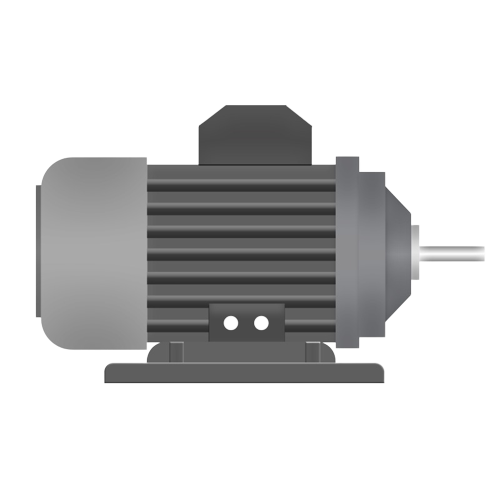
An electric motor is a machine that converts electrical energy into mechanical energy through the interaction of magnetic fields and current-carrying conductors, typically using electromagnetic induction.
Most electric motors develop their mechanical torque by the interaction of conductors carrying in a direction at right angles to a magnetic field. They operate using principle of electromagnetism, which shows that a force is applied when an electric current is present in a magnetic field. This force creates a torque on a loop of wire present in the magnetic field, which causes the motor to spin and perform useful work. Motors are used in a wide range of applications such as fans, power tools, appliances, electric vehicles and hybrid cars. Motors can run both on DC or AC supply.
-
Induction Motor
-
DC Motor
-
Synchronous Motor
-
Universal Motor
-
Permanent magnet DC motors
-
Series DC motors
-
Shunt DC motors
-
Compound DC motors
-
Induction motor:
-
An induction motor is a generally used AC electric motor. In an induction motor, the electric current in the rotor needed to produce torque is obtained via electromagnetic induction from the rotating magnetic field of the stator winding. The rotor of an induction motor can be a squirrel cage rotor or wound type rotor.
-
Used in different applications, induction motors are also called Asynchronous Motors. This is because an induction motor always runs at a slower speed than synchronous speed. The speed of the rotating magnetic field in the stator is called synchronous speed.
-
Induction machines are the most frequently-used type of motor used in residential, commercial, and industrial settings so far.
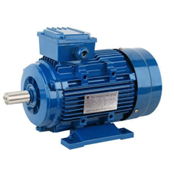
Figure 2: Induction motor
-
There are many type of motors.
Induction machines are the most commonly used motors in residential, commercial, and industrial applications.
There are four main types of DC motors:
All the above motors are used at different places. Now a days induction motors are widely used. Series DC motors can run on DC supply.
- A DC motor is an electric motor that runs on direct current power. In an electric motor, the operation is dependent upon simple electromagnetism. A current-carrying conductor generates a magnetic field, when this is then placed in an external magnetic field, it will encounter a force proportional to the current in the conductor and to the strength of the external magnetic field. It is a device that converts electrical energy to mechanical energy.
- It works on the fact that a current-carrying conductor placed in a magnetic field experiences a force that causes it to rotate with respect to its original position. Practical DC Motor consists of field windings to provide the magnetic flux and armature which acts as the conductor.
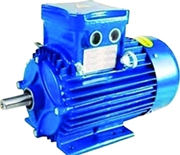
Figure 3: DC motor
- A synchronous motor is an AC motor in which the rotation of the shaft is the same pace as the frequency of the applied current. In other words, the way a synchronous motor works is the same as an AC motor does but with the difference that the total number of rotations made by the shaft in synchronous kind is equal to the integer multiple of the frequency of the applied current.
- The synchronous motor doesn’t depend on induction current for its working. In this kind of motor, and unlike the induction motors, there are multiphase AC electromagnets on the stator that produce a rotating magnetic field. In synchronous, the rotor consists of a permanent magnet that is synced with the rotating magnetic field and rotates in synchronous to the frequency of current applied to it.
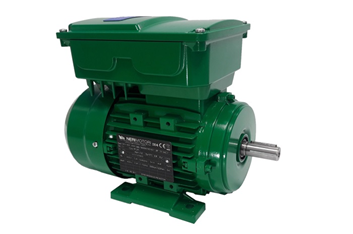
Figure 4: Synchronous motor
- A universal motor is a type of electric motor that can operate on either AC (alternating current) or DC (direct current) power. It is called a "universal" motor because of its ability to run efficiently on both types of electrical supply. The universal motor is similar in construction to a DC series motor, with a stator (field winding) and a rotor (armature winding). Both the stator and rotor windings are connected in series.
- This motor is widely used in various household appliances such as Vacuum cleaners, blenders, food processors, and mixers often use universal motors due to their high speed and compact design. Most of the universal motors are designed to operate at higher speeds, exceeding 3500 RPM.
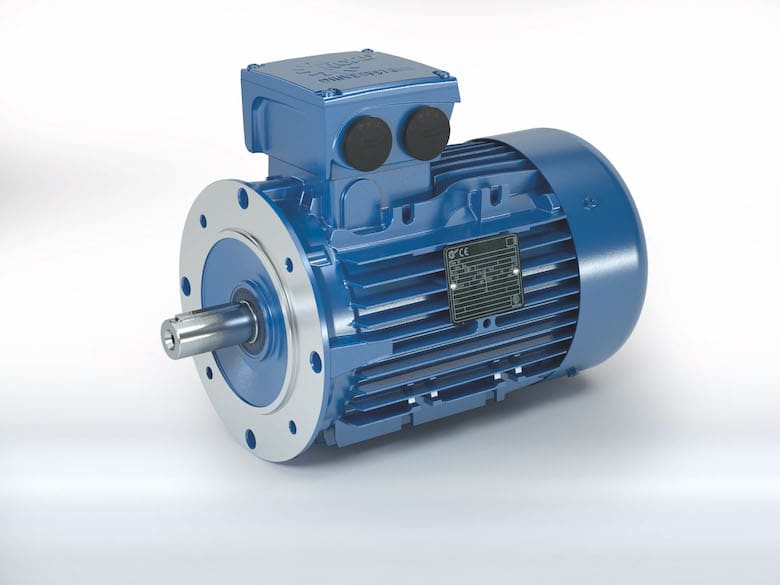
Figure 5: Universal Motor